


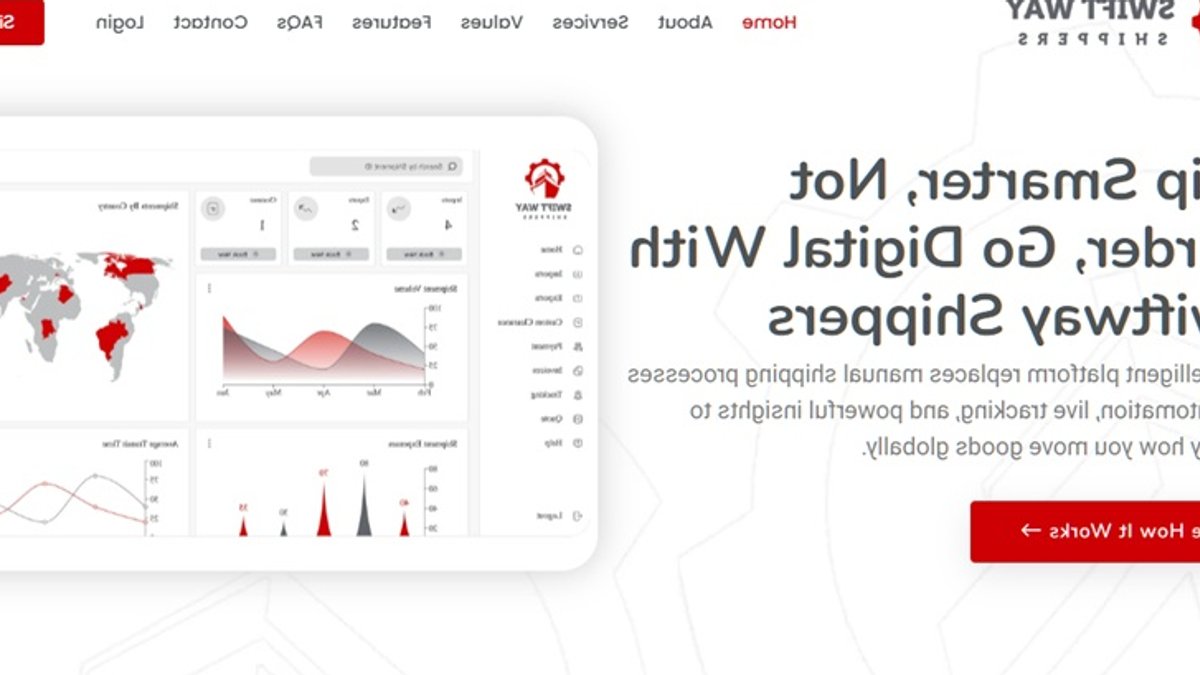
Ghanaian startup Swiftway is a digital freight forwarding platform built for African businesses, handling the full process of air and sea freight, customs clearance, and haulage across corridors including China, the UK, US, Turkey, and Dubai.
Launched in June 2025 by Abubakar Sadick Fuseini and Suleiman Abubakar Sadique, Swiftway allows business owners in Accra to ship goods internationally, and vice versa, without having to handle a maze of brokers, paperwork, and hidden charges.
“We do that for them, end-to-end,” Fuseini told Disrupt Africa.
The freight forwarding industry in Africa has two dominant players – informal brokers who are opaque and unreliable, and large multinationals like DHL Global Forwarding and Bolloré, which are simply too expensive for most SMEs.
“Nobody was building a transparent, tech-enabled solution specifically for the African SME importer. That is the gap we are filling. Globally, Flexport is doing something similar, but they have no meaningful focus on the African market. We are building for this market from the inside,” said Fuseini.
That gap is evident in the startup’s early traction. Fully-bootstrapped since launch, Swiftway has already onboarded over 540 active businesses and built a waitlist of more than 19,000 registered users.
“That kind of organic demand tells us the problem is real and the appetite is there. Growth has come primarily through digital channels Meta ads and WhatsApp, with strong word of mouth driving a significant portion of new clients,” Fuseini said.
Scaling the West African Corridor
Swiftway is currently closing a pre-seed round, and already serves clients importing primarily from China, the UK, and US. It is actively expanding into Nigeria through on-the-ground logistics partnerships.
“We have signed enterprise agreements with clients operating across West Africa. The vision is to become the leading digital freight forwarder across the West African corridor over the next three years,” Fuseini said.
Swiftway earns a service fee on every shipment covering its freight forwarding margin, customs clearance fees, and haulage coordination.
For larger enterprise clients, the startup operates on volume-based agreements. It has billed approximately US$71,000 in revenue since launch, while remaining fully bootstrapped.
“We are reinvesting aggressively into growth right now, but the unit economics are healthy and improving as our volumes scale.”
While the company is currently focused on expansion, the reliance on a pre-seed funding round introduces a variable to its long-term strategy. Without immediate external capital injection, the startup must balance the speed of growth with the risk of exhausting its runway before securing a Series A or larger funding round.

